Get Heard
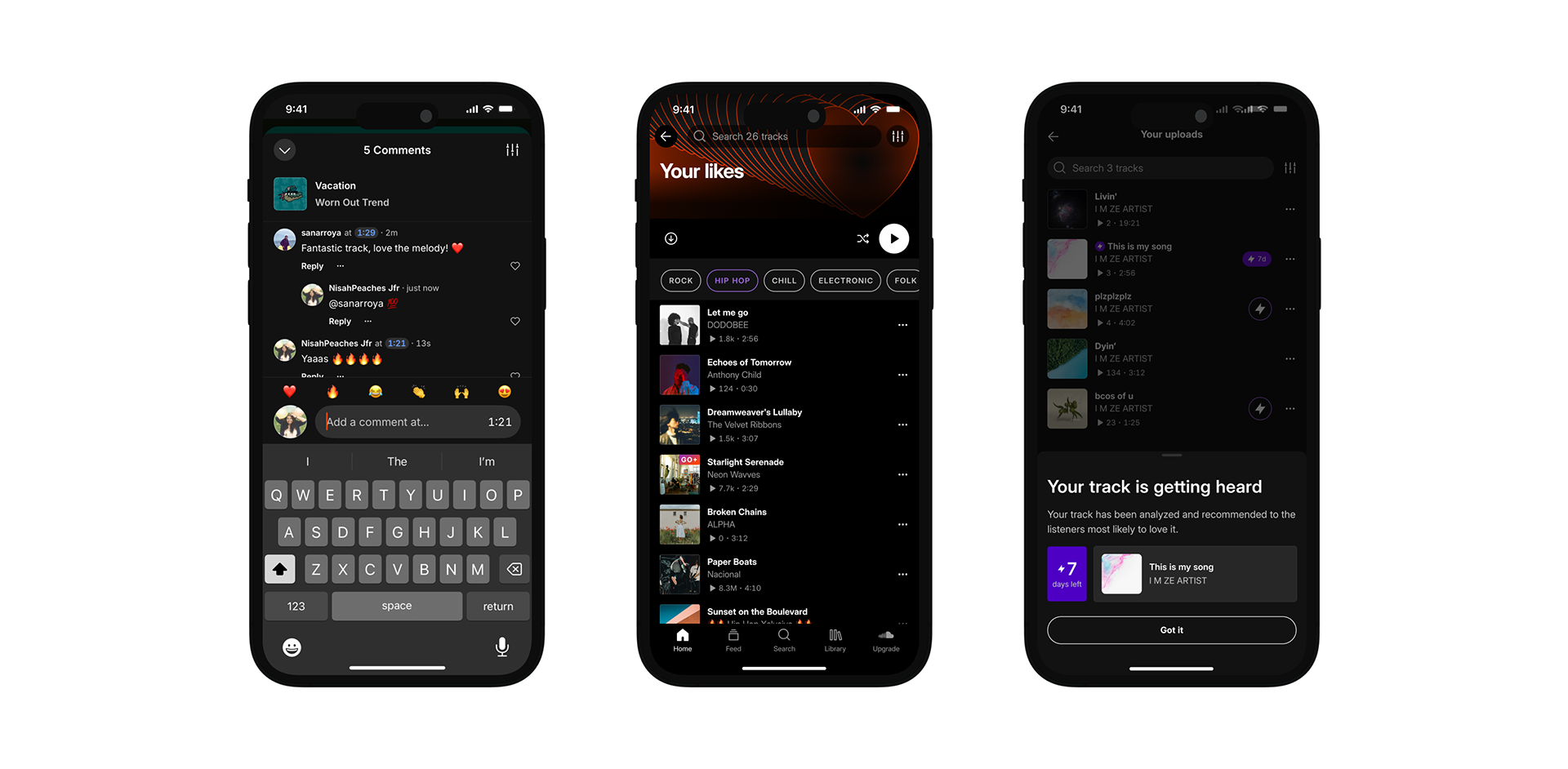
Increasing mobile engagement with the GetHeard feature
Due to confidentiality agreements and non-disclosure agreements (NDAs) with SoundCloud, I am unable to share all of my projects in detail. The case studies and insights available here highlight key aspects of my approach and methodology.
They represent a portion of my comprehensive experience in user research. If you have any questions or would like to learn more about my professional journey, please feel free to reach out.
[Overview]
Get Heard is a feature within the Artist Pro subscription that uses a predictive audio algorithm to recommend newly uploaded tracks to approximately 100 relevant listeners. While the feature performed well overall, mobile engagement and conversion rates were significantly lower than web.
[Objectives]
- Understand why eligible mobile users hesitate to use the module during upload
- Assess feature comprehension and trust in the algorithm
- Evaluate perceived value across emerging and established creators
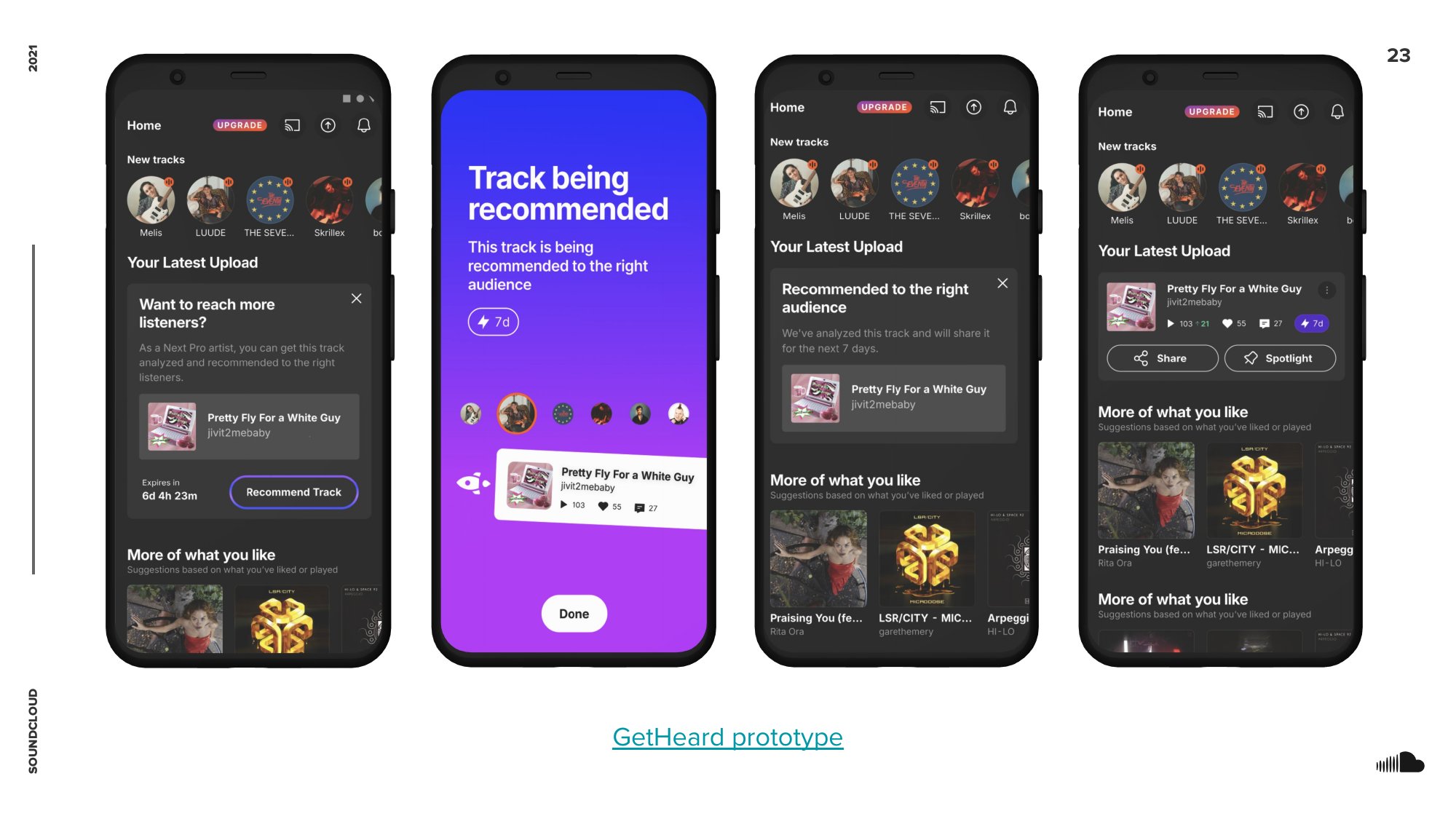
- Inform prototype improvements for the mobile upload flow
[Impact]
- Informed repositioning and messaging of the feature
- Guided prototype improvements in the upload flow
- Contributed to the refinement of the released iOS experience
Get Heard – Mobile Feature Optimization
Get Heard uses a predictive audio algorithm to recommend newly uploaded tracks to approximately 100 relevant listeners. While the feature performed well overall, mobile engagement and conversion rates were significantly lower than web.
The core question: why are eligible mobile users hesitant to use the Get Heard module during upload?
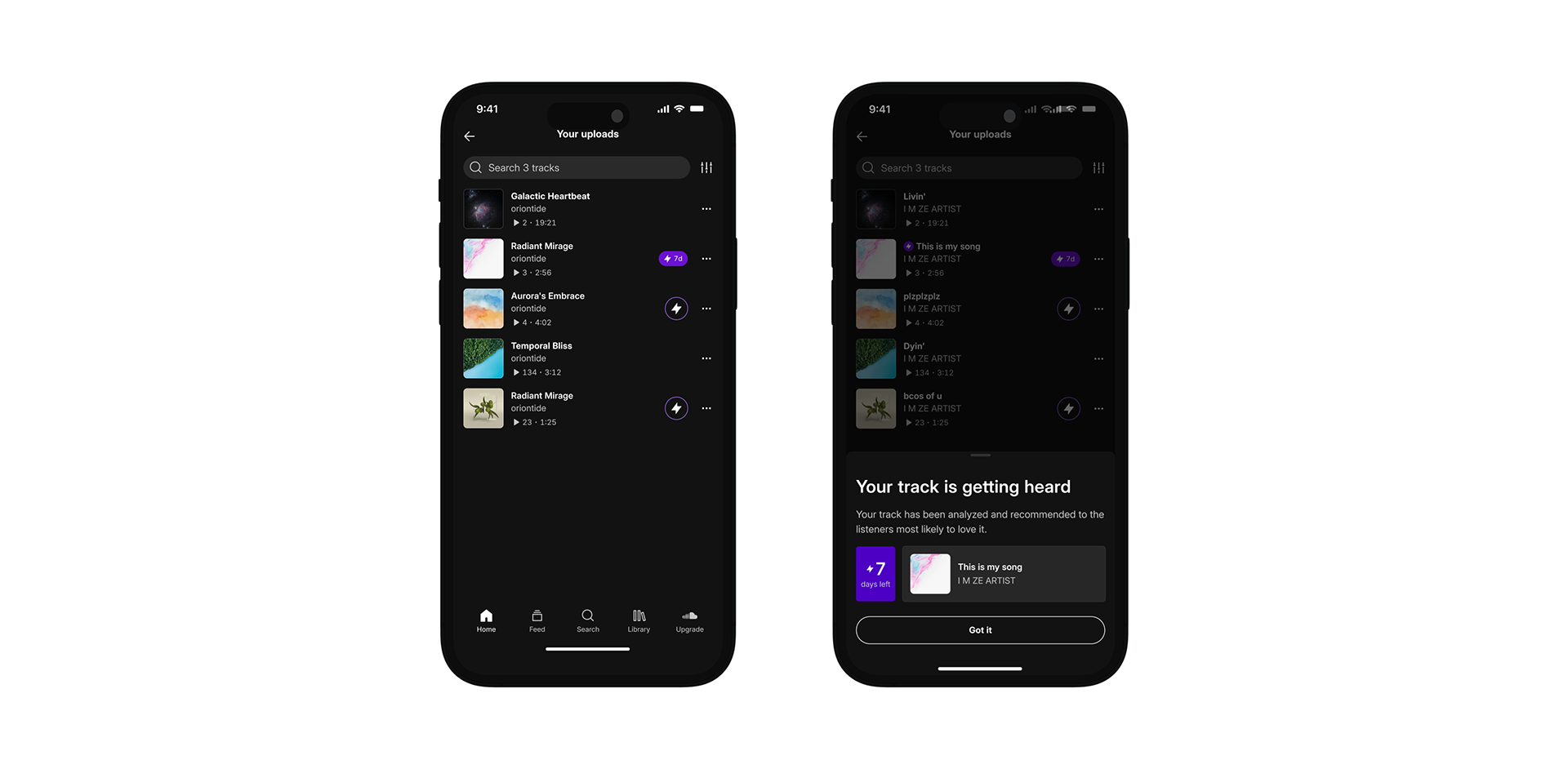
Barriers to mobile engagement
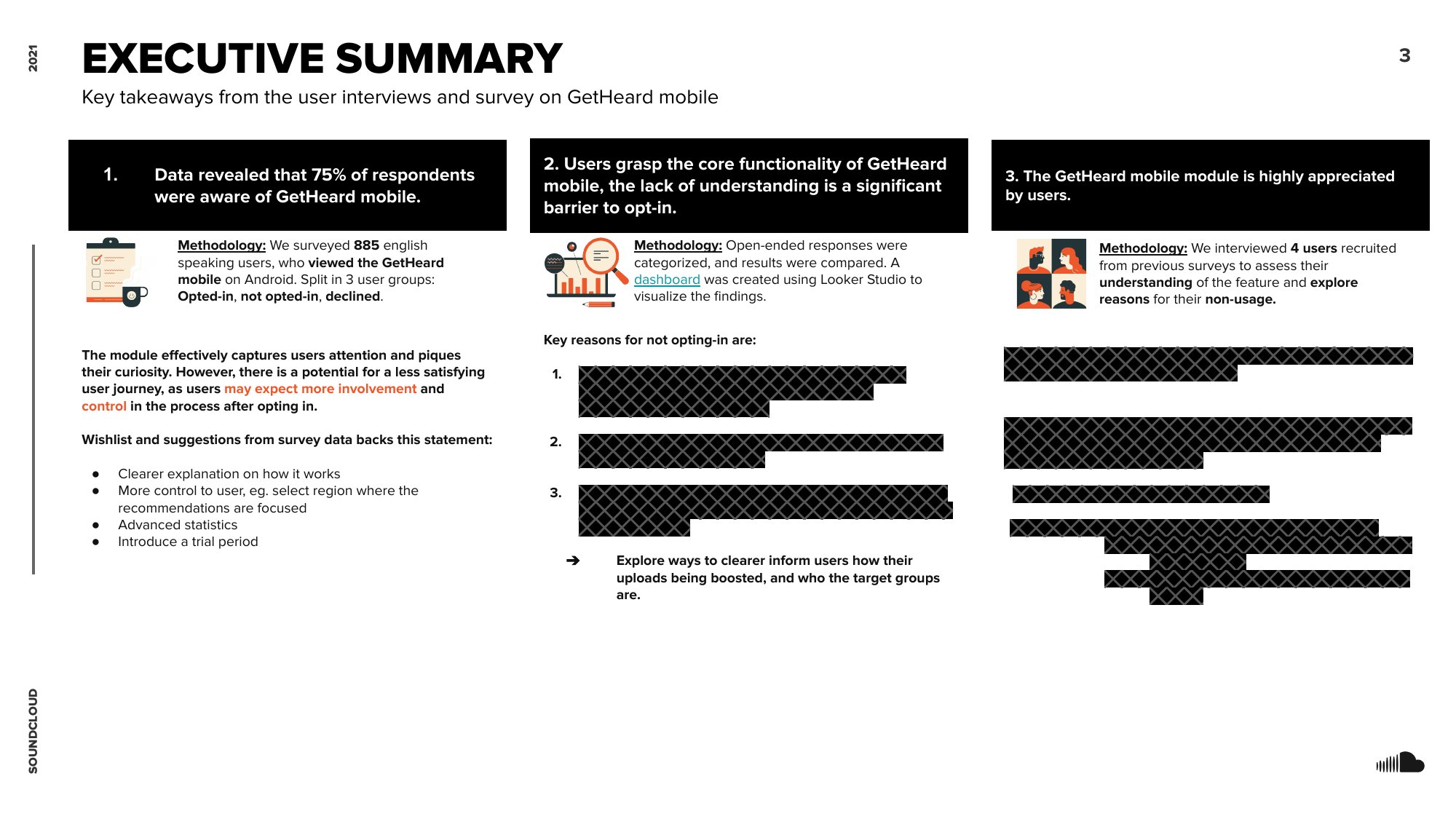
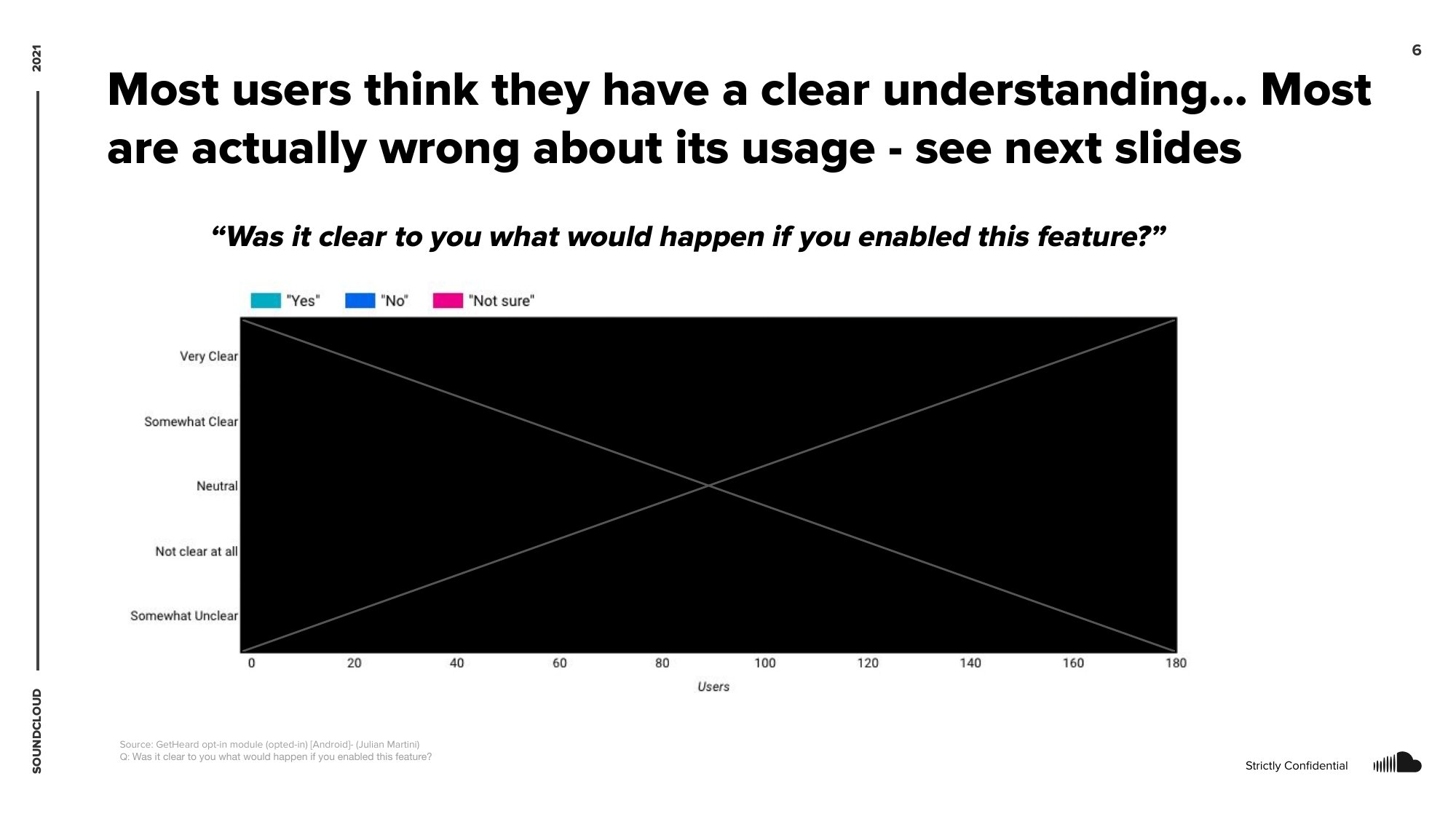
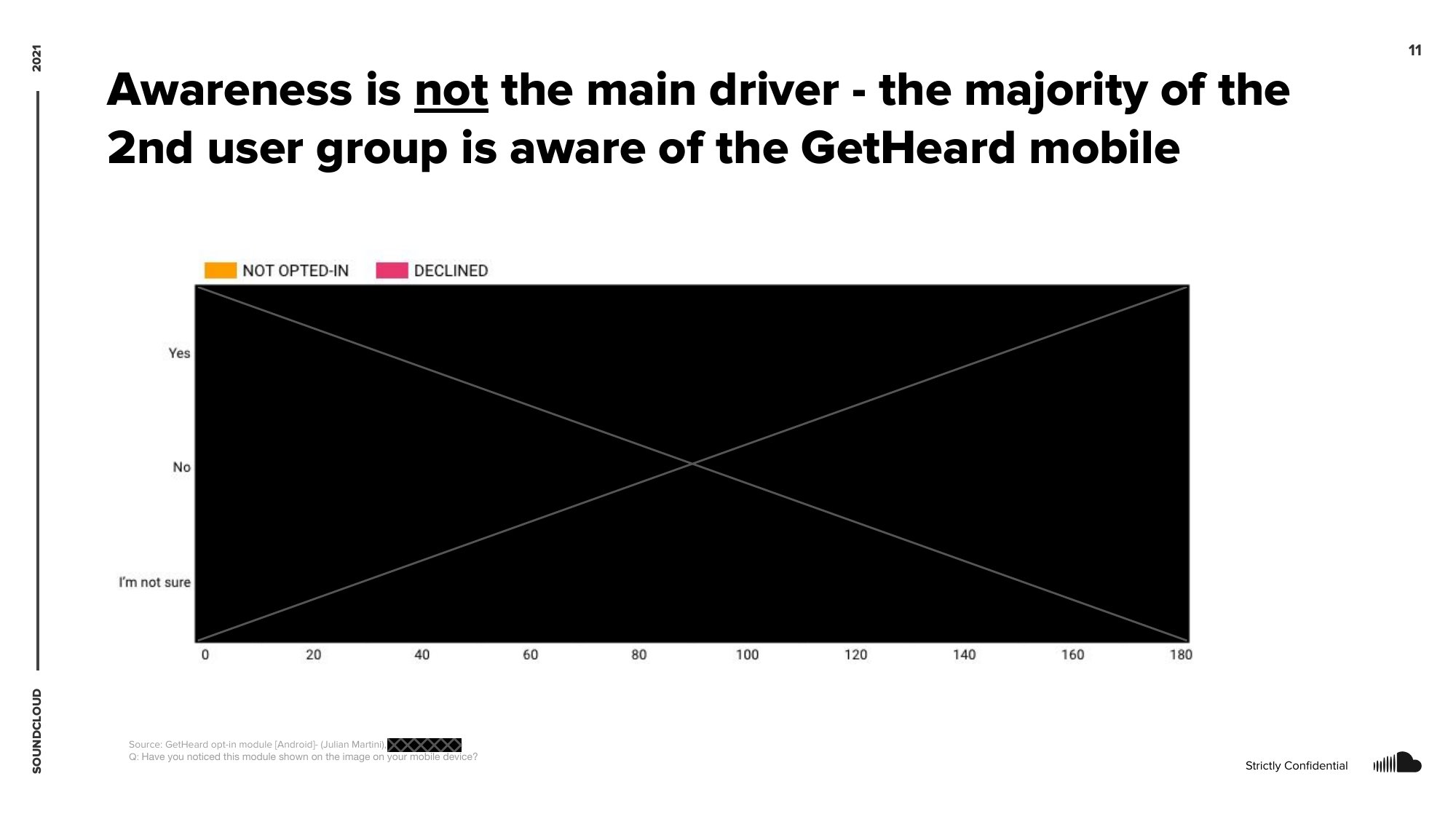
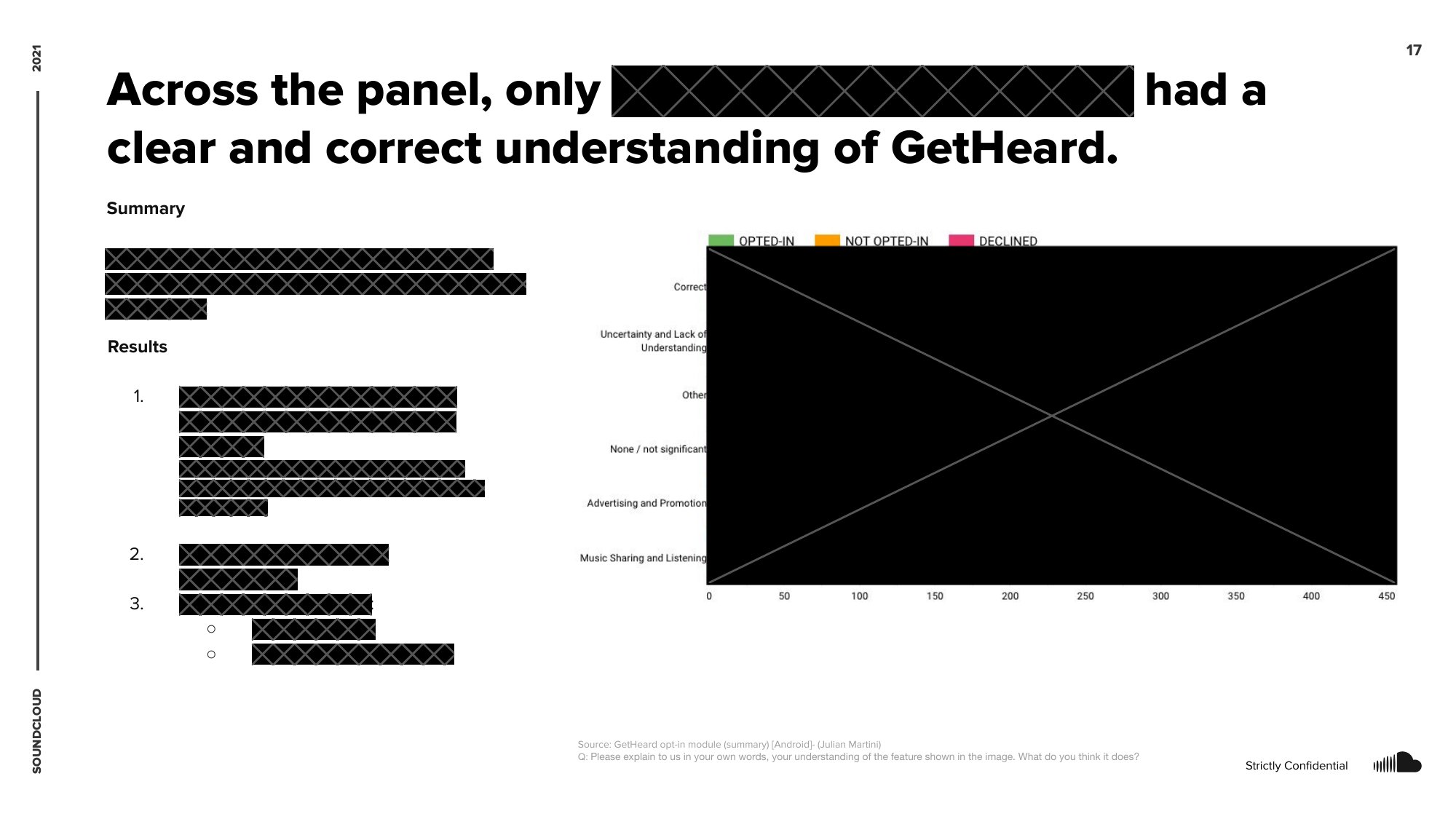
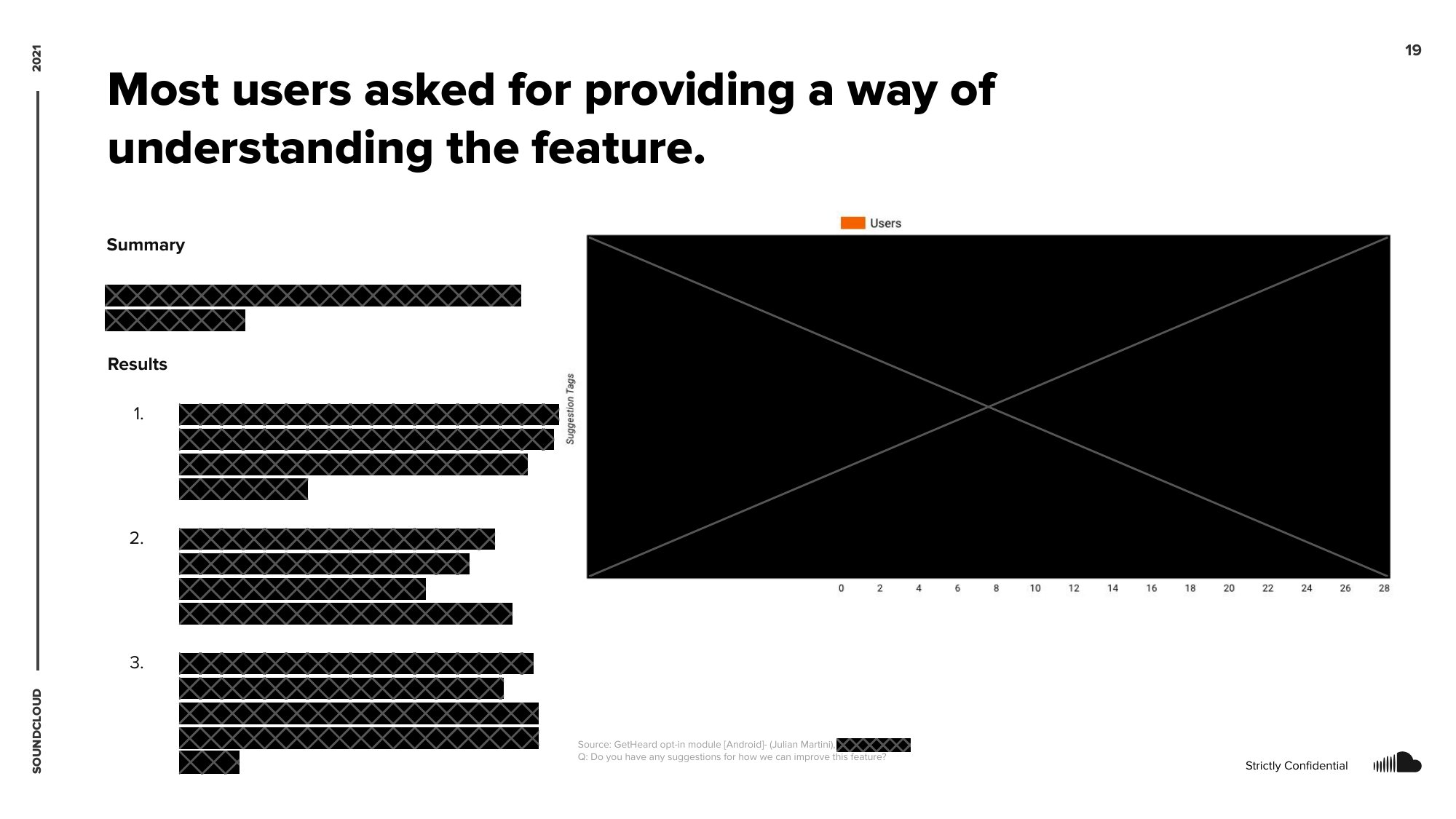
Data revealed that 75% of respondents were aware of GetHeard mobile. While the module effectively captured users' attention and piqued their curiosity, only a small fraction had a clear and correct understanding of how the feature actually works.
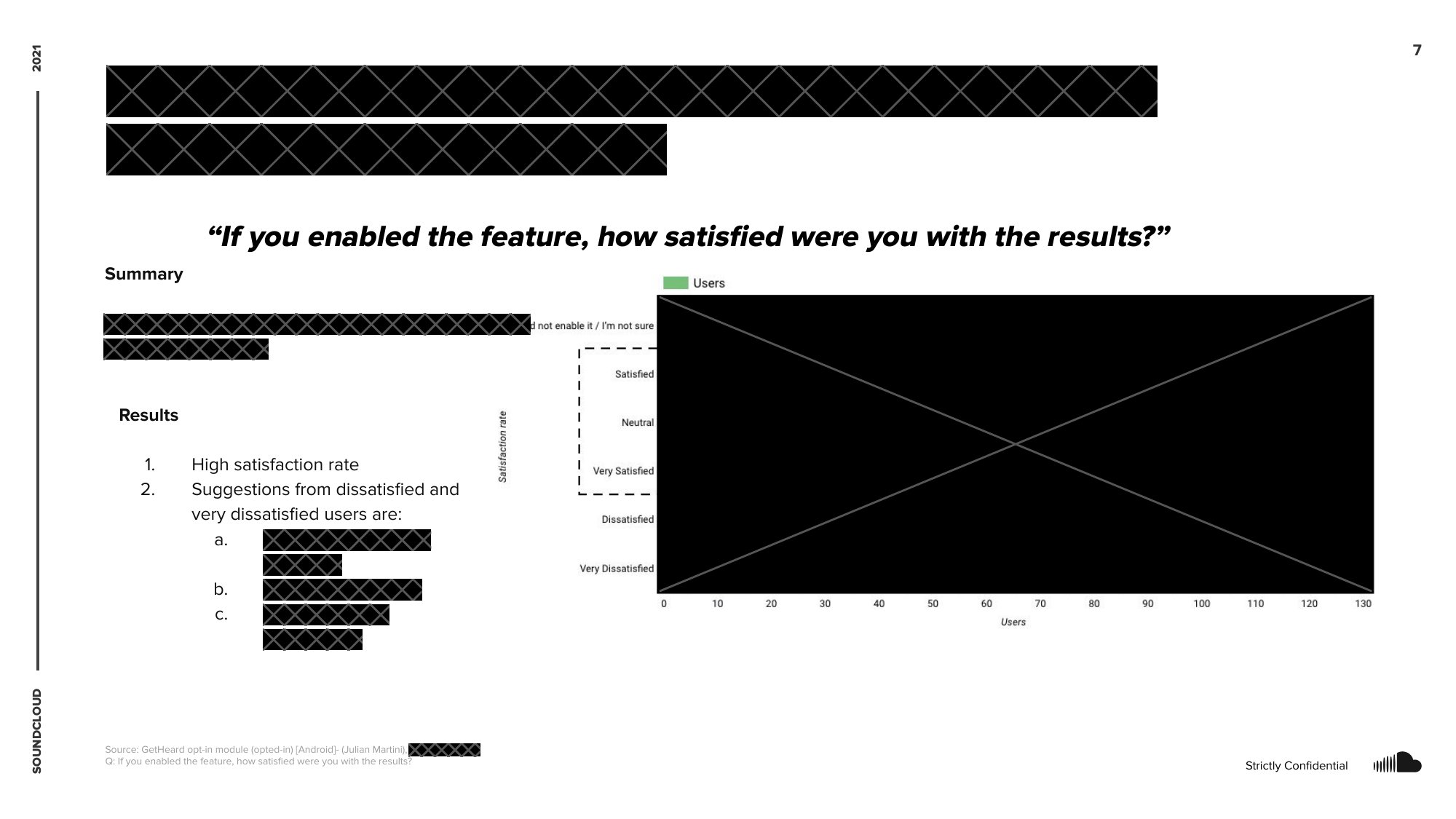
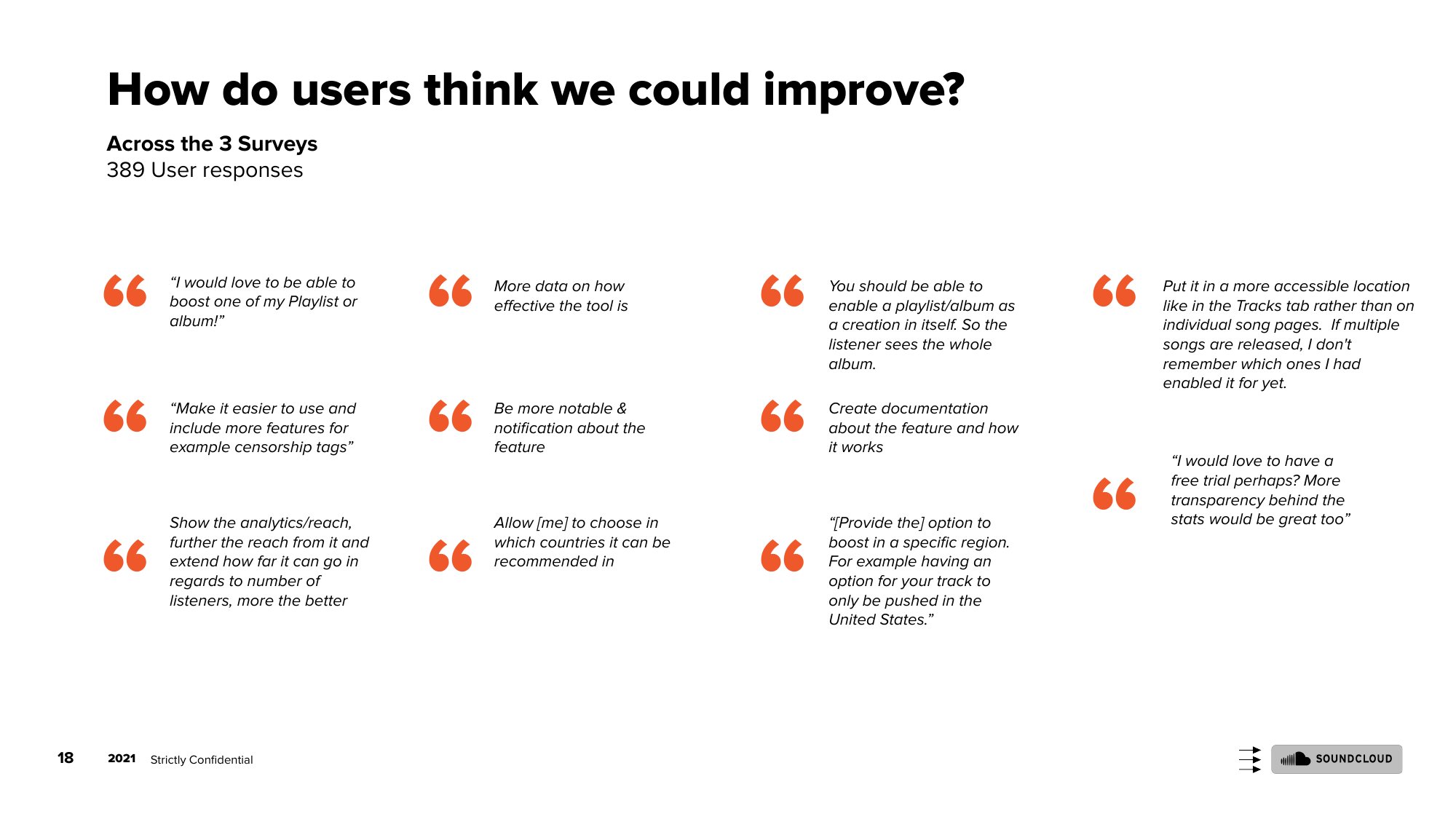
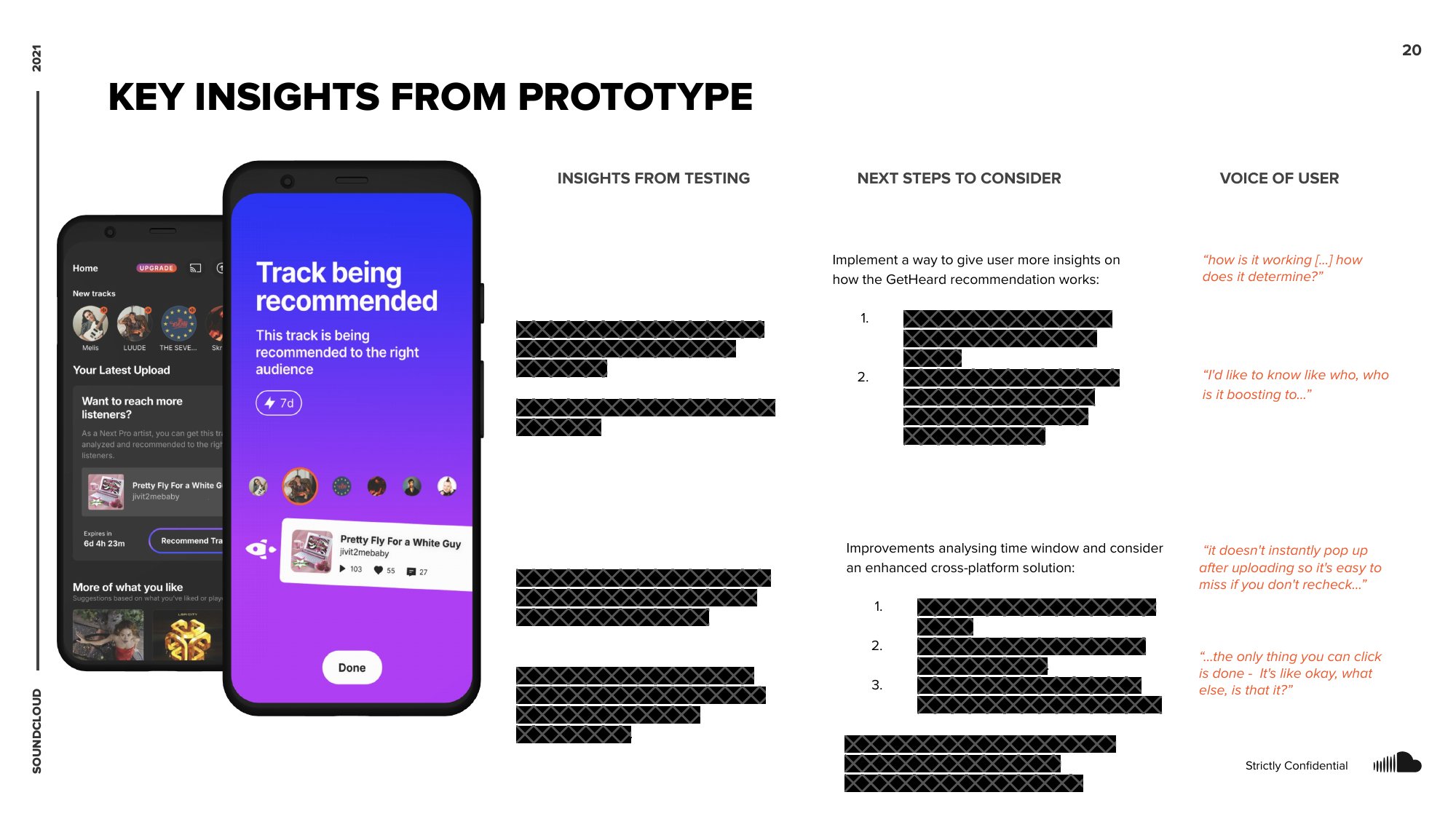
Users grasped the core functionality but the lack of deeper understanding was a significant barrier to opt-in. After opting in, users expected more involvement and control — requesting clearer explanations of how it works, the ability to select target regions, advanced statistics, and trial periods.
Key reasons for not opting-in included uncertainty about the feature's value, confusion around what "boost" meant, and trust concerns about algorithmic distribution. Value perception differed between emerging and established creators.
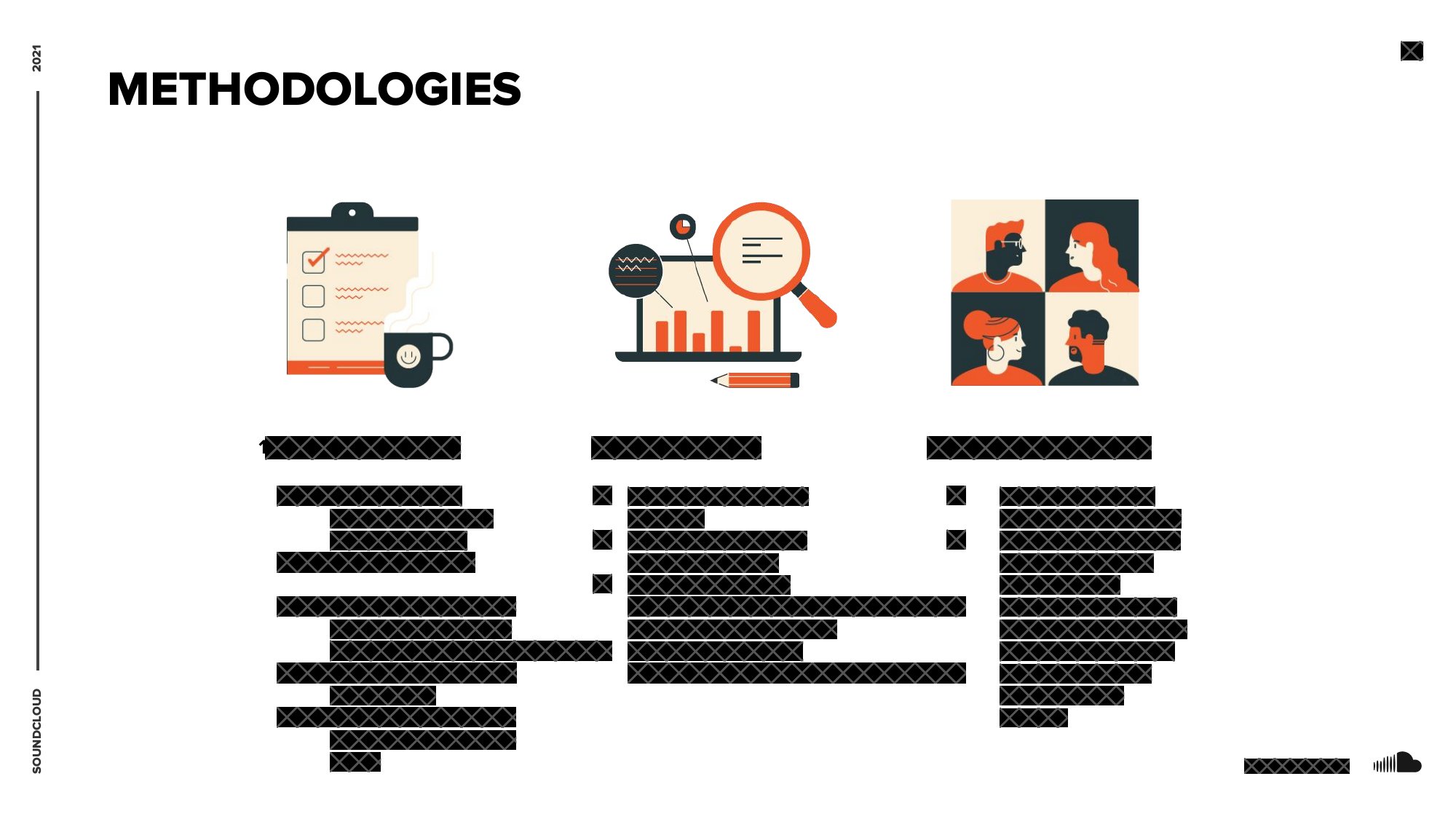
Two-phase mixed methods
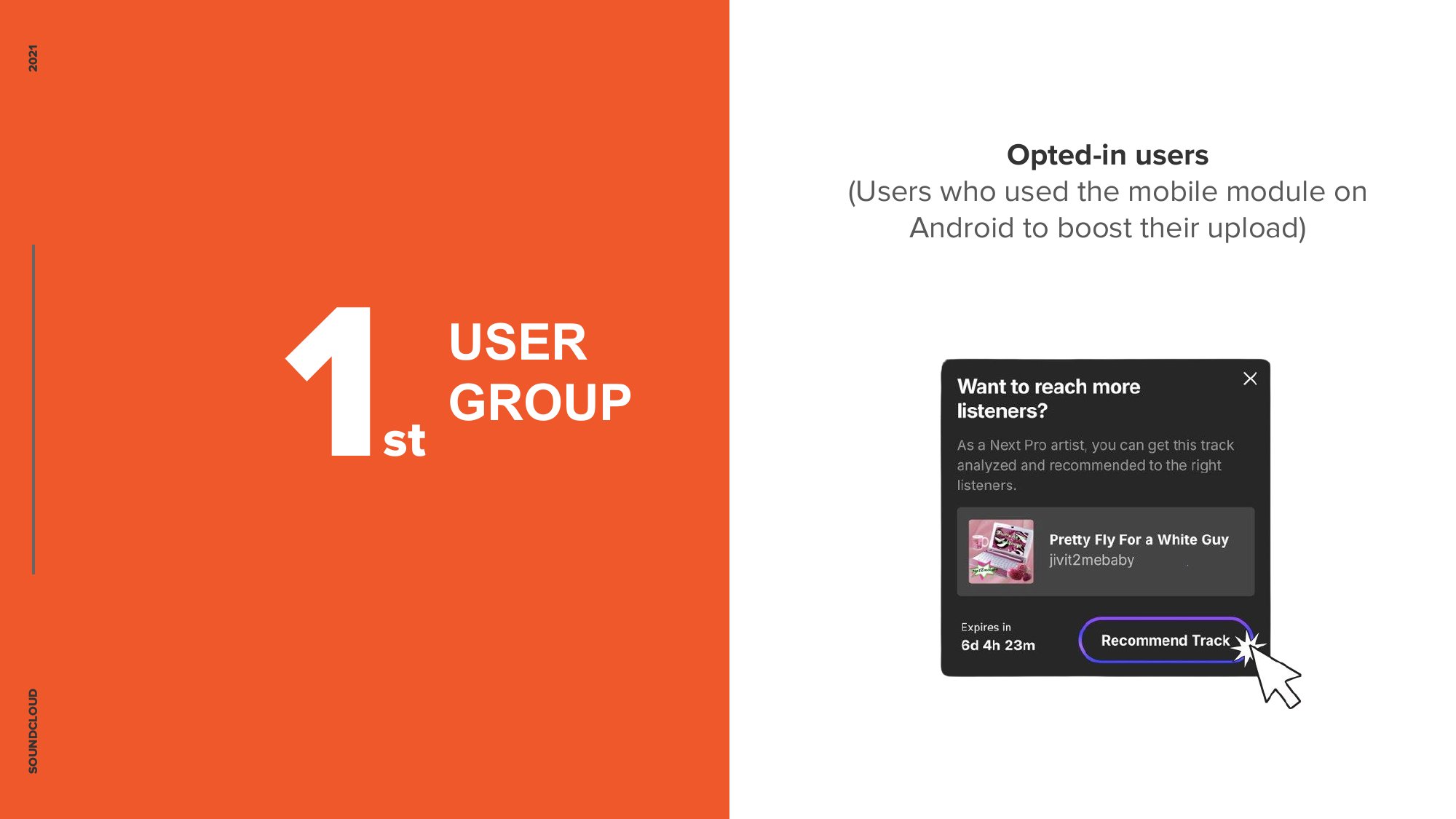
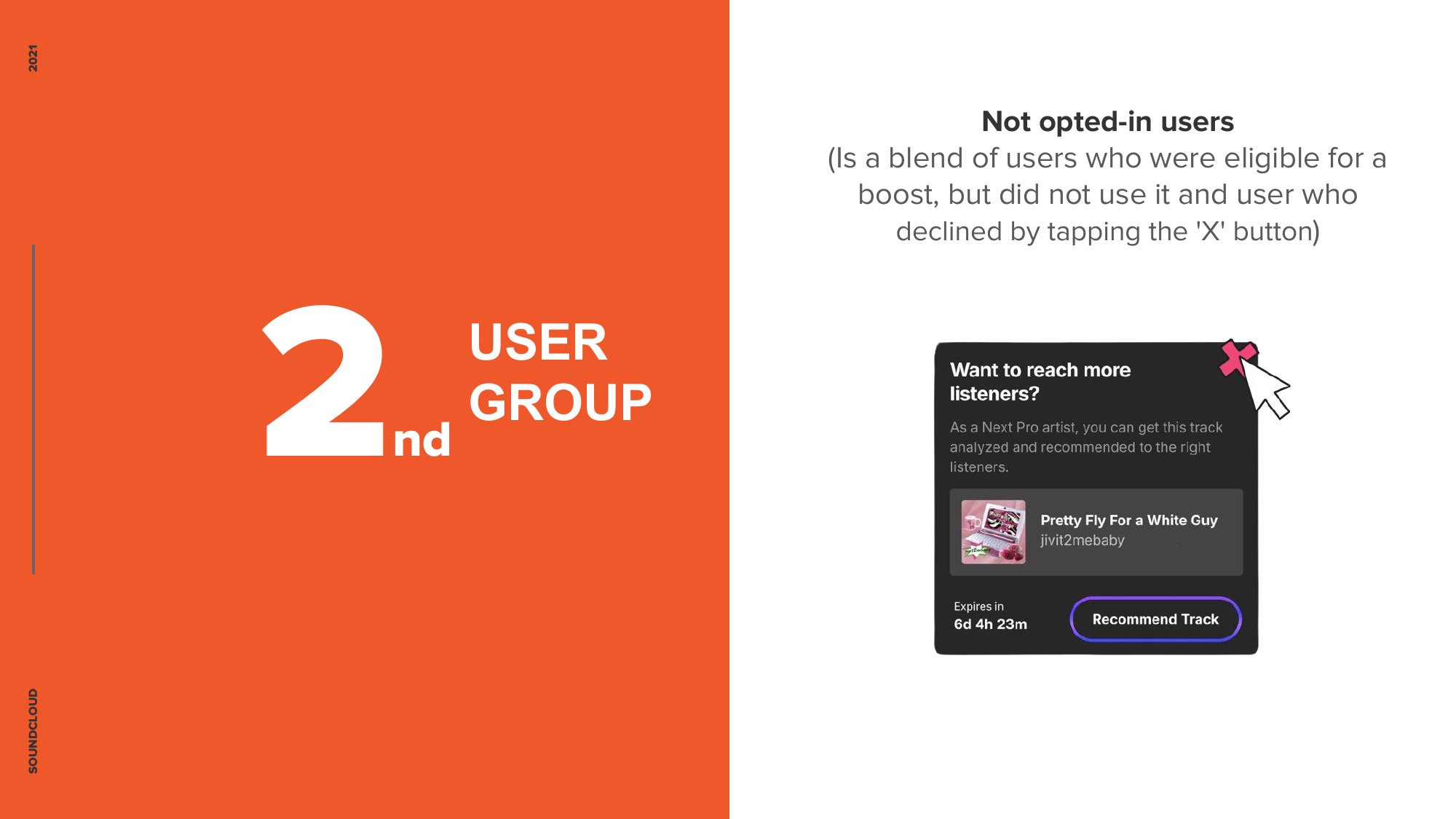
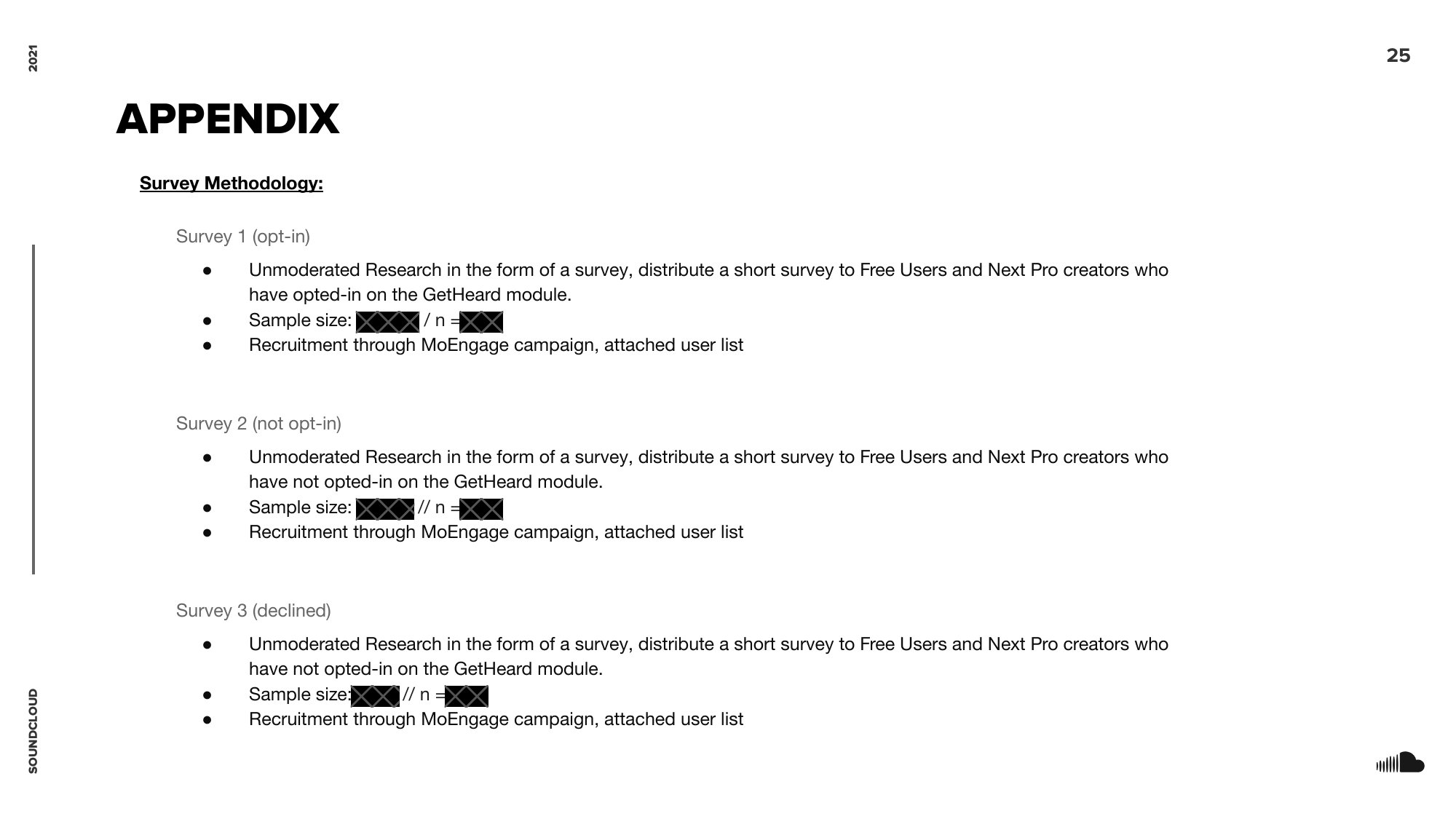
Phase 1 – Quantitative Survey: We surveyed 885 English-speaking Android users who had viewed the GetHeard module. Participants were split into three user groups: users who opted-in, users who were eligible but did not opt-in, and users who actively declined by tapping the ‘X’ button.
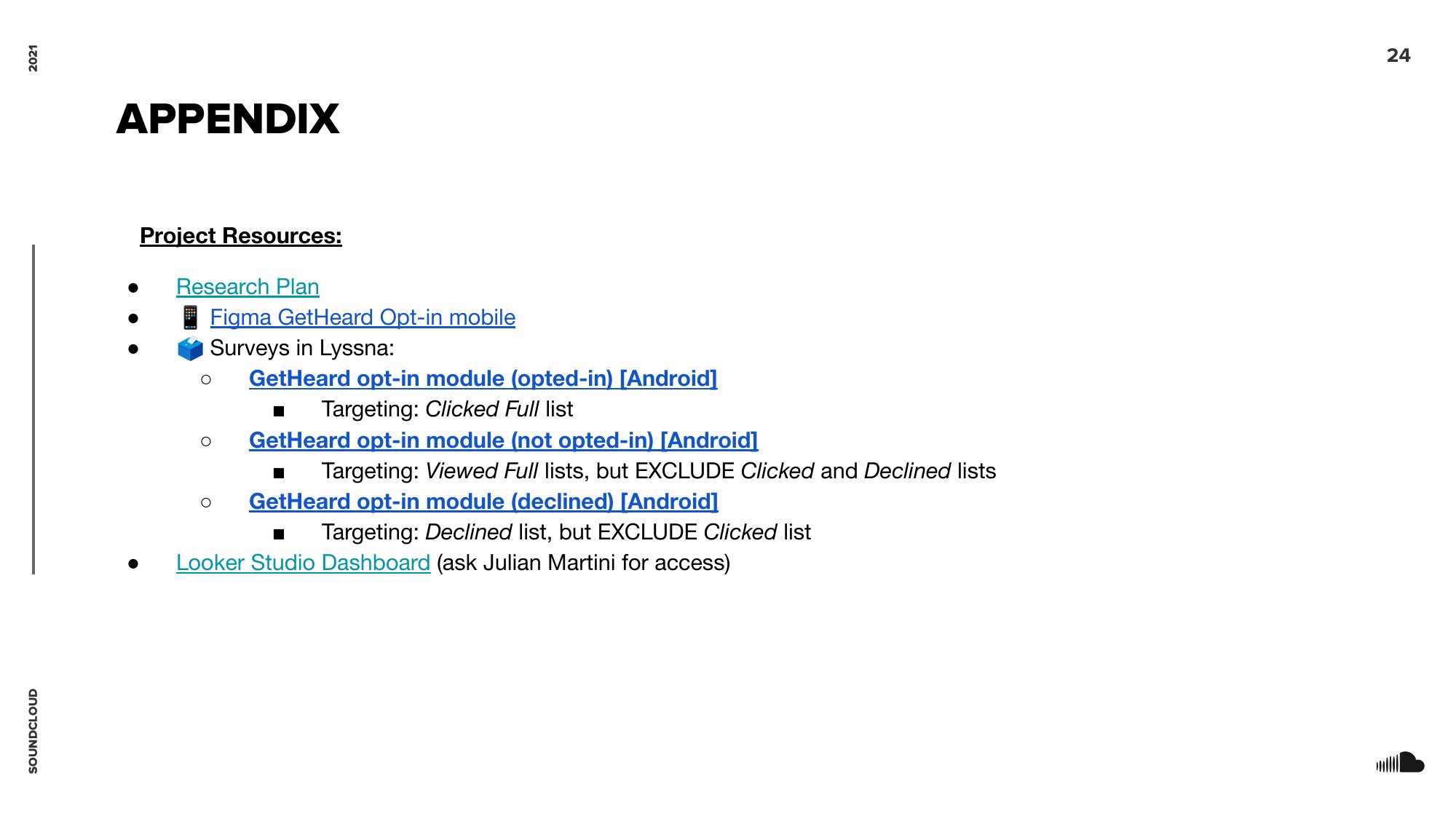
Open-ended responses were coded and synthesized into themes. A Looker Studio dashboard was created to visualize behavioral patterns and perception gaps across the three groups.
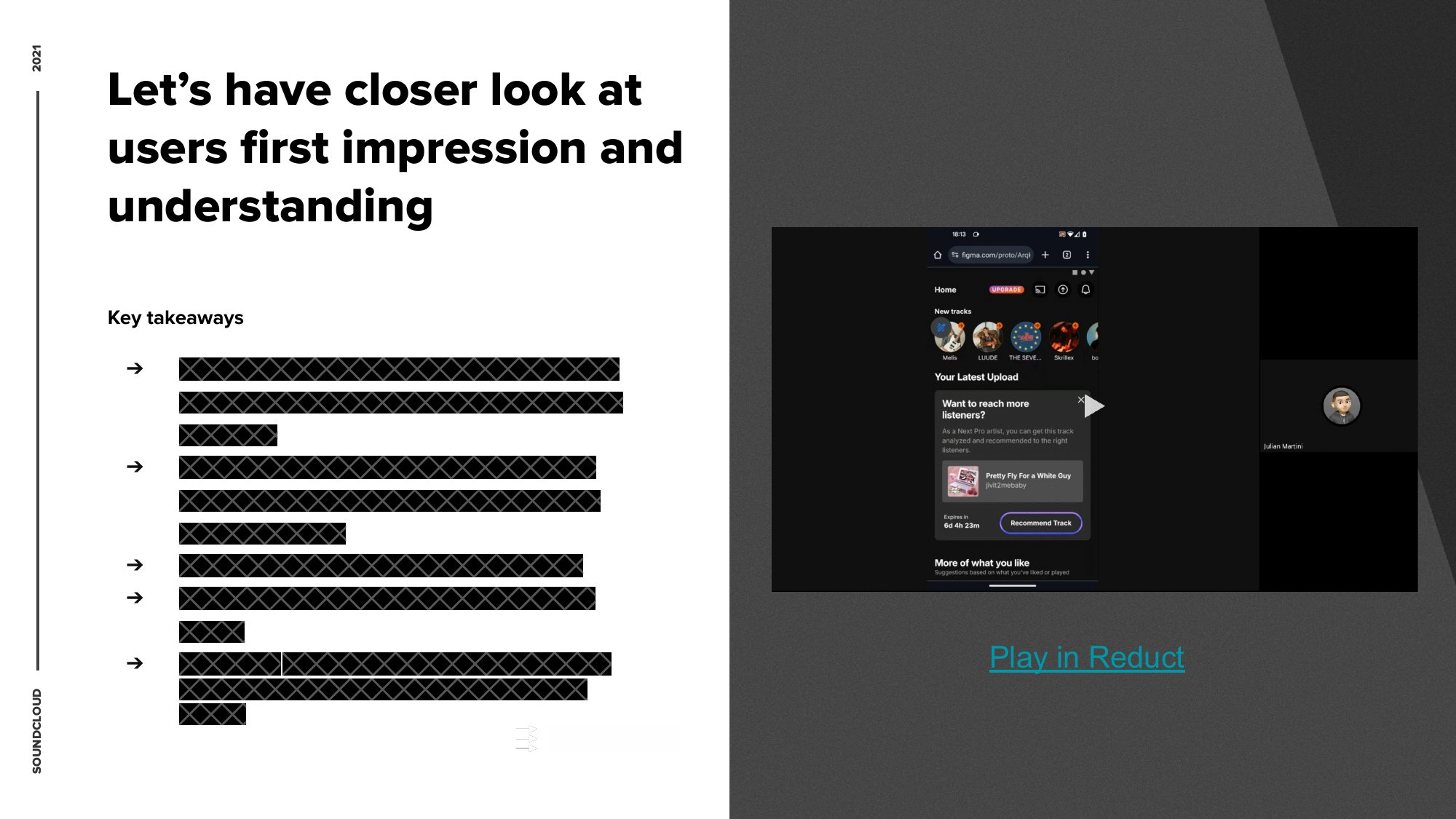
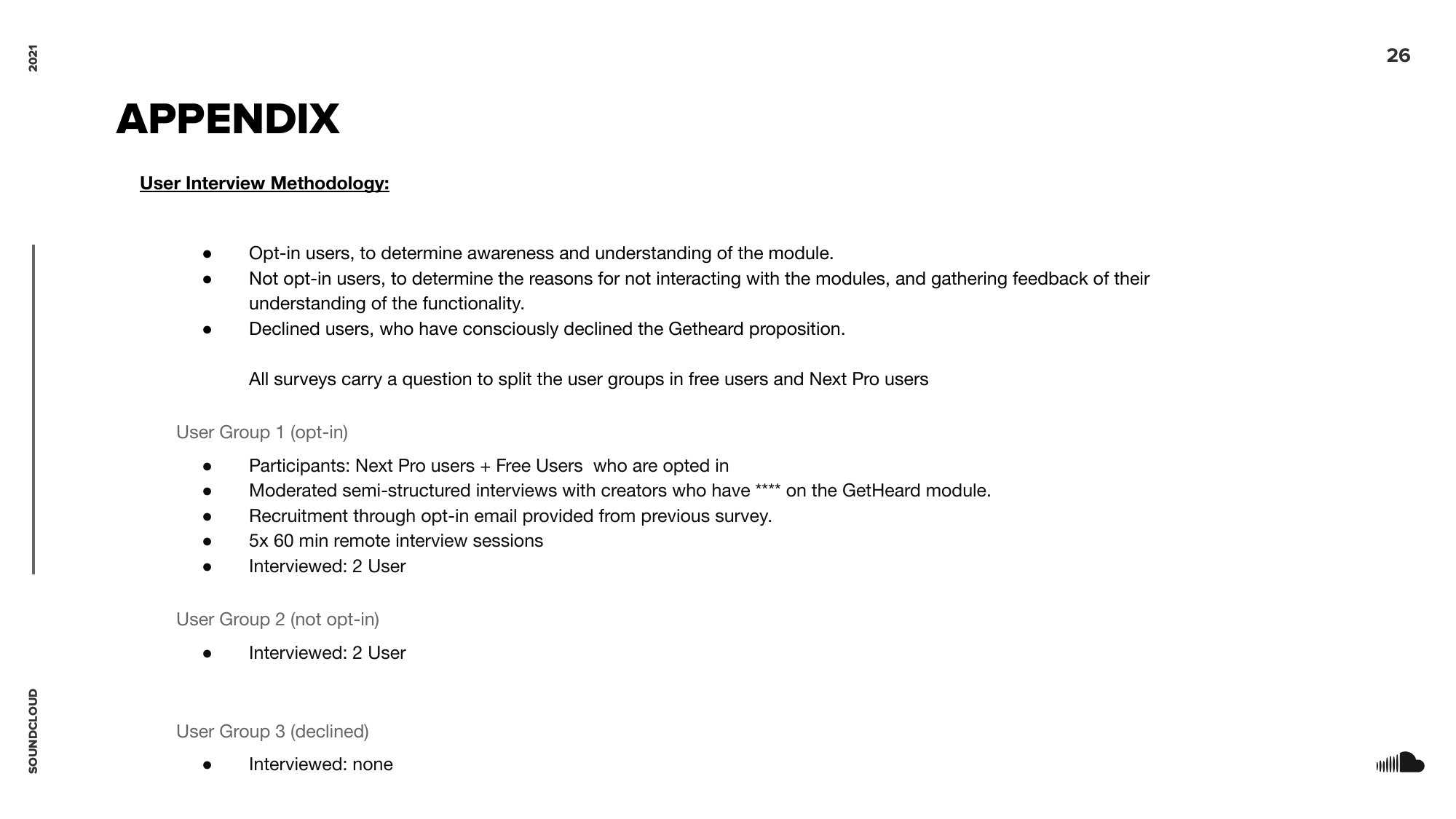
Phase 2 – Qualitative Interviews: Four users were recruited from the previous surveys for 60-minute moderated semi-structured interviews. Sessions explored feature comprehension, trust in the algorithm, perceived value, and reasons for hesitation. Interview highlights were captured in Reduct for synthesis.
GetHeard Mobile – Full Presentation (Redacted)
Below is the redacted research presentation I created at SoundCloud, covering executive summary, user group analysis, key insights from prototype testing, and recommendations for improvement.